New York Tax Error: How a Typo Impacted 50,000+ NY Filers and What Netfintax Can Do For You
In the complex world of tax regulations, precision is paramount. Even the smallest oversight can trigger a domino effect, leading to significant financial repercussions for thousands of taxpayers. Recently, New York State learned this lesson the hard way when a seemingly minor typographical error by the New York State Department of Taxation and Finance (NYS DTAF) resulted in a major disruption, impacting over 50,000 tax filers across the state.
This isn’t just a bureaucratic hiccup; it’s a tangible issue that has left many New Yorkers either overpaying their state income taxes or receiving substantially smaller refunds than they were rightfully due. For individuals and small business owners alike, such discrepancies can cause unexpected financial strain and considerable confusion. Understanding the origins of this New York Tax Error, identifying if you’re affected, and knowing the steps to take are crucial for safeguarding your financial well-being.
At Netfintax, we understand the intricacies of US accounting and tax laws, and we are committed to helping our clients navigate unforeseen challenges like this regulatory update NY. This comprehensive guide will break down the NYS tax error, help you determine your potential exposure, outline the state’s response, and provide a clear action plan, emphasizing how our expertise can provide the critical support you need to resolve this issue efficiently and accurately.
The Typo Heard ‘Round New York: Unpacking the NYS Tax Error
The recent announcement from the New York State Department of Taxation and Finance (NYS DTAF) has sent ripples through the taxpayer community, revealing a widespread issue stemming from a critical tax filing error. A typographical error, seemingly minor on the surface, has been identified as the root cause of significant discrepancies in tax returns for tens of thousands of New York residents. This section will delve into the specifics of this impactful blunder, detailing how a simple mistake led to a cascade of NY tax refund issues and financial distress.
The Genesis of the Error: A Simple Typo, Massive Impact
The New York State tax department confirmed that the error originated from an incorrect tax rate applied to specific income thresholds. While the exact details of the typo (e.g., a misplaced decimal, an incorrect digit in a tax bracket formula, or an error in calculation software used for forms) have been a subject of much discussion, the core problem lies in an inaccurate calculation that was subsequently applied to a large volume of tax returns. This seemingly innocuous error, once propagated, led to thousands of incorrect tax calculations. For the average taxpayer, identifying such a nuanced discrepancy within complex tax forms or software-generated figures is nearly impossible without expert assistance or specific guidance.
The impact wasn’t limited to a few isolated cases; it rapidly escalated to affect over 50,000 filers. Such a broad scope highlights the critical importance of meticulous detail in tax administration and the potential for even the smallest oversight to have far-reaching consequences on individuals’ finances. This serves as a stark reminder of the challenges in ensuring tax return accuracy, especially when relying on standardized systems that can amplify tiny errors.
The Immediate Fallout: Overpayments and Reduced Refunds
The two primary forms of financial detriment experienced by affected filers are distinct yet equally problematic:
-
Overpayments of New York State Income Taxes: A significant portion of the impacted individuals ended up paying more in state income taxes than they legally owed. This means that funds rightfully belonging to them were incorrectly remitted to the state, creating an unexpected financial burden and potential cash flow issues, particularly for those on tight budgets or small businesses managing operational expenses.
This NY tax overpayment can range from minor amounts to substantial sums, depending on the filer’s income level and specific tax situation, all due to the incorrect application of tax rates or calculations by the NYS DTAF. Many taxpayers might not have even realized they overpaid, assuming their filed return was correct.
-
Substantially Smaller Refunds: For other taxpayers, the error manifested as a significant reduction in their anticipated tax refunds. Instead of receiving the full amount they were due, their refunds were understated, leaving them shortchanged. These smaller tax refunds NY can disrupt personal financial planning, affecting everything from debt repayment and savings goals to planned expenditures.
Many New Yorkers rely on their tax refunds for various purposes, and a sudden, unexpected reduction can cause considerable stress and force a reallocation of resources. Identifying these tax return discrepancies requires careful review of original filings against what was received, a task many find daunting without professional guidance.
The widespread nature of these issues underscores the need for prompt action and clear communication from both the state and trusted tax advisors. The financial well-being of thousands of New Yorkers hinges on an effective resolution to this unfortunate New York Tax Error.
Are You One of the 50,000? Identifying Impacted New York Taxpayers
With thousands potentially affected, a crucial question for many New Yorkers is, “Am I one of them?” Identifying whether you are among the impacted individuals requires a proactive approach and careful review of your financial documents. This section provides guidance on how to spot potential discrepancies and helps you understand the nuances of the financial impact, aiming to provide a pathway to NY taxpayer relief.
Who Is At Risk? Demographics and Filing Scenarios
While the NYS DTAF has not released a detailed demographic breakdown of all affected filers, the nature of the error – an incorrect tax rate application to specific income thresholds – suggests that certain groups might be more susceptible:
- Middle to High-Income Earners: Tax rates typically vary across income brackets. An error in a specific rate or bracket calculation would disproportionately affect taxpayers whose income falls within or crosses the faulty threshold.
- Individuals with Complex Returns: While a simple typo can affect anyone, those with more intricate returns, including various income sources, deductions, or credits, might find it harder to self-identify the error amidst other calculations.
- Filers Who Used Tax Software Directly: Many taxpayers rely on commercial tax preparation software. If the software’s underlying New York State tax logic incorporated the state’s erroneous guidance or data, then anyone using that software could be at risk, regardless of their personal tax complexity.
- Those Expecting a Refund: Taxpayers who anticipated a refund but received a significantly smaller amount, or no refund at all, should be particularly vigilant. This is a common symptom of the identified New York Tax Error.
It’s important to remember that even if you don’t fit these profiles perfectly, you could still be affected. The broadest advice is for any New York State income tax filer to exercise caution and conduct a review of their return.
Checking Your Tax Records for Discrepancies
The first step in determining if you are an affected NY taxpayer is to meticulously review your personal tax records. Here’s what you should examine:
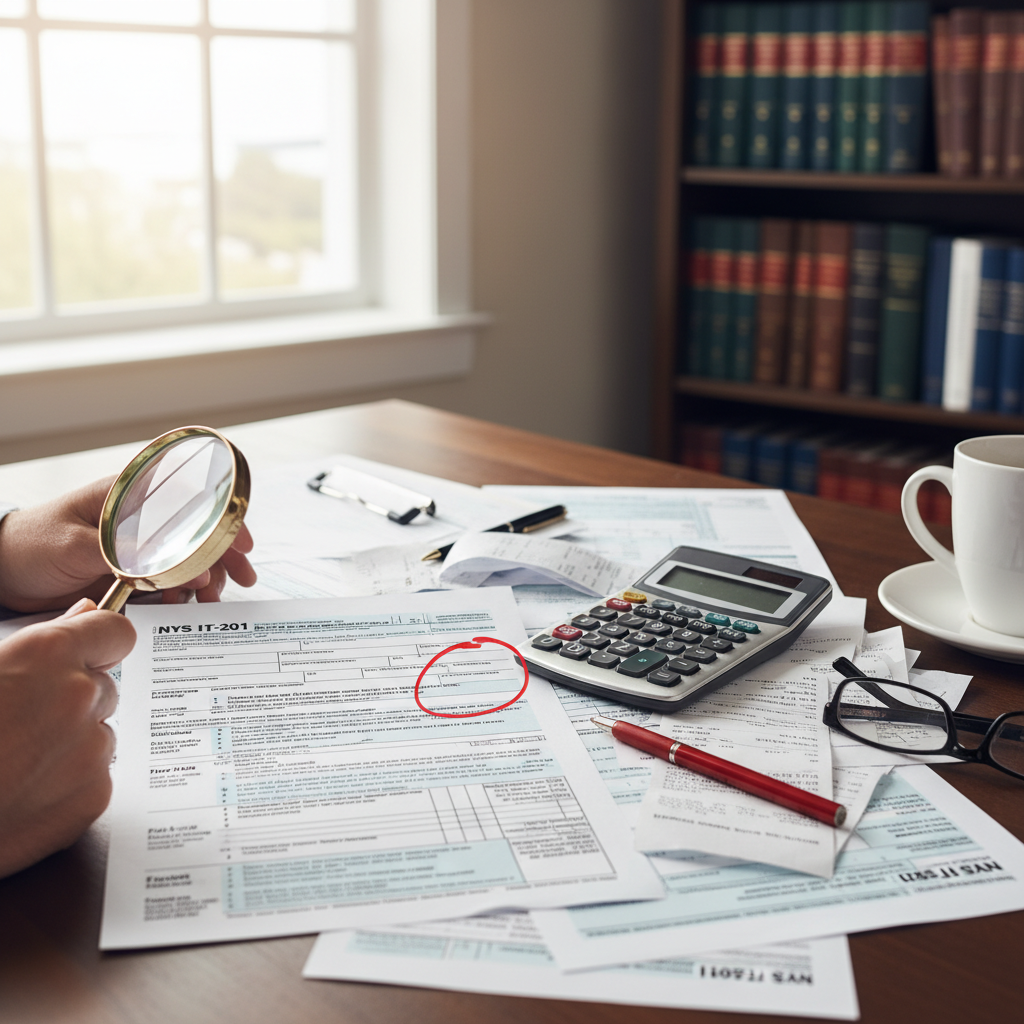
- Your Original New York State Income Tax Return (Form IT-201 or IT-203): Pay close attention to the sections detailing your taxable income, the tax calculated, and any credits or deductions claimed. While pinpointing the exact typo might be difficult, looking for unexpected changes or numbers that don’t align with your understanding of the tax law is key.
- Refund Statements or Tax Bills from NYS DTAF: Compare the refund amount you received (or the tax bill you were issued) with the amount you calculated and expected to receive based on your filed return. A noticeable discrepancy, particularly a lower-than-expected refund or a higher-than-expected bill, is a strong indicator you might be affected.
- Correspondence from the NYS DTAF: Keep an eye out for any specific notices, letters, or communications from the New York State tax department. The state will likely issue targeted or general advisories regarding the error, and these documents could provide direct confirmation or further instructions.
This process of checking NY tax status and records is foundational to addressing the error. Do not discard any official documents, as they will be critical for any potential amendment or claim.
Understanding the Financial Impact: From Overpayment to Under-Refund
Once you’ve identified a discrepancy, it’s crucial to understand what it means for your finances:
- Actual Overpayment: If your review suggests you paid more state income tax than you legitimately owed, this is an NY tax overpayment. The goal here is to recover the excess funds paid to the state. This typically involves amending your return to reflect the correct tax liability and then claiming a refund for the difference.
- Reduced Refund (Under-Refund): If your expected refund was significantly higher than what you actually received, it implies that the state’s calculation (due to the typo) reduced your refund amount. In this scenario, the state still owes you money. The correction process would aim to ensure you receive the remaining portion of your rightful refund.
Distinguishing between these two scenarios is vital for formulating the correct action plan. Both require accurate recalculation of your tax liability and proper communication with the state. Netfintax can assist in this crucial step, helping you interpret the financial impact and chart the most effective course of action for your unique situation, ensuring tax return accuracy.
NYS Department of Taxation and Finance’s Role and Resolution Efforts
When a large-scale tax filing error occurs, the state agency responsible bears the burden of acknowledging the issue and outlining a clear path to resolution. The New York State Department of Taxation and Finance (NYS DTAF) has taken steps to address the New York Tax Error, and understanding their official stance and proposed solutions is critical for affected taxpayers. This section details the NYS tax department response and their strategy for rectifying the situation.
The State’s Acknowledgment and Apology
The NYS Department of Taxation and Finance has publicly acknowledged the typographical error, taking responsibility for the mistake that led to incorrect tax calculations for thousands of filers. This acknowledgment is an important first step, signaling the state’s commitment to address the problem. While an official apology might vary in its prominence, the very act of disclosing such a widespread error implies an understanding of the inconvenience and financial stress it has caused.
Official statements typically emphasize the agency’s dedication to fair and accurate tax administration and their efforts to prevent future occurrences. Such disclosures are usually made through their official website, press releases, and sometimes directly to affected taxpayers via mail or secure online portals. Keeping an eye on these official channels is crucial for staying informed about any new NY tax updates.
Automated Corrections vs. Required Taxpayer Action
A key question for many affected individuals is whether the state will automatically correct their returns or if they need to take action. The NYS DTAF has indicated that they are actively working to rectify the errors. Historically, for widespread errors like this, state tax agencies often attempt to:
- Automated Corrections: For some taxpayers, especially those with simpler returns where the error is easily identifiable and fixable within the state’s systems, the NYS DTAF may be able to automatically process corrections. This would involve recalculating the tax liability and, if applicable, issuing an additional refund check or adjusting the tax due without requiring the taxpayer to file an amended return.
- Required Taxpayer Action: In other cases, particularly for more complex returns or situations where the state requires additional information, taxpayers may be notified that they need to take specific steps. This could involve filing an amended New York State tax return (Form IT-201-X or IT-203-X) to report the correct figures.
It is imperative for taxpayers not to assume that their issue will be automatically resolved. Even if the state aims for automated corrections, it is always wise to verify that the correction has been made accurately and that you have received the full amount you are due. This vigilance is part of ensuring tax return accuracy and avoiding further complications.
Communication Channels and Official Guidance
To keep affected taxpayers informed, the New York State tax department is utilizing several communication channels to provide official tax guidance:
- Official Website: The NYS DTAF website is the primary source for official announcements, FAQs, and detailed instructions related to the New York Tax Error. Taxpayers should regularly check the “Hot Topics” or “Alerts” section.
- Direct Mail: Affected taxpayers may receive direct correspondence from the state, detailing their specific situation and outlining the necessary steps or confirming an automated correction.
- Dedicated Helplines or Contact Numbers: The state may establish special phone lines or sections within their general customer service to address inquiries specifically related to this error.
- Social Media and News Outlets: Public announcements through these channels help disseminate information broadly.
When seeking information or advice, always refer to official sources or consult with a qualified tax professional like Netfintax. Relying on unofficial advice can lead to further errors or delays in correcting tax errors and securing your rightful refund or avoiding overpayment. The responsibility of a state tax agency responsibility extends to clear and consistent communication, and taxpayers should leverage these channels.
Your Action Plan: Steps for Affected New York Tax Filers
Discovering that your tax return might be incorrect due to a state error can be unsettling. However, taking proactive and informed steps is crucial to resolve the issue and recover any overpaid funds or under-refunded amounts. This section outlines a clear action plan for individuals who suspect or confirm they have been impacted by the New York Tax Error, guiding you on how to fix NY tax error.
Reviewing Your Original Tax Return and Refund Status
Before contacting the state or taking any corrective action, it’s essential to have a complete understanding of your original filing and what transpired afterward:
- Locate Your Filed New York State Income Tax Return: Gather your copy of Form IT-201 or IT-203 (Resident or Nonresident Income Tax Return), along with all supporting schedules and worksheets. This document is your foundational reference point.
- Compare Your Expected Refund/Payment with Actuals: Carefully compare the refund amount you anticipated receiving (as calculated on your original return) against the actual refund amount that was deposited into your account or the check you received. If you owed taxes, compare your expected payment with what you actually remitted or were billed for.
- Check Your NYS Tax Account Online: The New York State Department of Taxation and Finance offers an online service where you can check NY tax refund status and view your account information. This portal may provide details on any adjustments made by the state or notifications about your specific return. Log in securely to review all available information.
Pay close attention to any disparities. A significant difference between what you expected and what occurred is your primary indicator that you might be an affected NY taxpayer. Document these differences clearly.
Contacting the NYS Department of Taxation and Finance
Once you’ve reviewed your records and have a clear understanding of the discrepancy, the next step is to contact NYS tax directly. This allows you to inquire about your specific case and seek guidance on the state’s resolution process:
- Utilize Official Communication Channels: As mentioned previously, check the NYS DTAF website for any dedicated hotlines or specific contact numbers established for this particular error. If no specific line is provided, use their general taxpayer assistance lines.
- Be Prepared with Information: When you call or send correspondence, have your Social Security number, the tax year in question, your original tax return, and any notices from the state readily available. Clearly state that you are inquiring about the recent New York Tax Error and how it might have affected your return.
- Ask Specific Questions: Inquire if your return has been flagged for correction, if an automated adjustment is underway, or if you are required to file a tax amendment NY. Ask for clarification on how the typo specifically impacted your calculation.
Patience is key, as the state’s phone lines may be busy given the widespread nature of the issue. However, direct communication is often the most effective way to get personalized information regarding your situation.
Documenting All Communications and Correspondence
This step is absolutely critical for your protection and for facilitating a smooth resolution process. Proper documentation for tax claims can make all the difference:
- Keep Detailed Records of Phone Calls: For every phone call with the NYS DTAF, record the date and time of the call, the name and title of the representative you spoke with, the reference number provided (if any), a summary of the conversation, and any instructions or advice given.
- Retain All Written Correspondence: Make copies of every letter, notice, or email you send to the state, and keep all correspondence you receive from them. This includes any corrected refund checks or notices of adjustment.
- Maintain Digital Records: If you use online portals, take screenshots of relevant pages, especially those showing refund status, account adjustments, or official notices.
Having a meticulous log of all interactions provides undeniable evidence should there be any further disputes or delays. This comprehensive record will be invaluable, especially if you later need to dispute tax error NY or seek professional assistance from Netfintax to navigate the complexities.
Navigating Tax Corrections: Why Professional Guidance is Crucial
While the New York State Department of Taxation and Finance is working to resolve the recent typo-induced errors, the process of correcting tax returns and ensuring you receive your rightful refund or avoid overpayment can be intricate. This is where the expertise of a professional accounting firm like Netfintax becomes not just helpful, but truly crucial. Engaging a Tax accountant New York is often the smartest decision for individuals and businesses impacted by such regulatory updates.
The Complexity of Tax Amendments and Resubmissions
Amending a tax return, even for a seemingly straightforward error like a typo, is often more complex than filing the original return. It involves more than just changing a number; it requires:
- Understanding Specific Amendment Forms: There are specific forms (e.g., Form IT-201-X for New York) that must be used for amendments, and they differ from the original forms. Filling these out correctly requires a precise understanding of their structure and purpose.
- Accurate Recalculation: You must accurately recalculate your entire tax liability based on the correct figures. A minor error in one line item can affect multiple other calculations, including credits, deductions, and penalties.
- Attaching Proper Documentation: Amended returns often require specific supporting documentation to justify the changes. Without correct attachments, the amendment could be rejected or significantly delayed.
- Adhering to Deadlines and Procedures: There are strict timelines for filing amended returns, and specific procedures for submission (e.g., where to mail, if electronic filing is available). Missing these details can jeopardize your claim.
For someone unfamiliar with tax law, navigating these complexities can be overwhelming and increase the risk of making further mistakes. This is where professional tax advice NY from a firm well-versed in tax compliance NY becomes invaluable. We at Netfintax have extensive experience in tax correction services, ensuring every step is handled meticulously.
Ensuring Accuracy and Maximizing Your Entitlement
A professional tax advisor does more than just fill out forms; they work to ensure you receive everything you’re entitled to. With the New York Tax Error, this means:
- Precise Error Identification: While the state has identified a general typo, a professional can pinpoint exactly how it impacted your specific return, ensuring the correction is accurate and complete.
- Maximizing Your Refund/Minimizing Overpayment: Beyond just correcting the typo, an expert can review your entire return with fresh eyes. This might uncover other legitimate deductions or credits you missed in your original filing, potentially increasing your refund or further reducing your tax liability beyond the typo’s immediate effect. This comprehensive approach is part of providing effective NY tax help.
- Mitigating Penalties and Interest: While the error originated with the state, sometimes delays or further mistakes in the amendment process can lead to penalties. A professional ensures timely and accurate submission, protecting you from unintended consequences.
- Streamlined Communication: Dealing with government agencies can be time-consuming and frustrating. A tax professional can often communicate with the NYS DTAF on your behalf, acting as an intermediary to clarify issues and push for resolution, particularly in NY tax dispute resolution.
The goal is not just to fix the problem, but to secure the best possible financial outcome for you, ensuring that you recover every dollar you’re owed.
Partnering with Netfintax: Your Expert Guide Through NY Tax Corrections
At Netfintax, we pride ourselves on being your trusted partner for all US accounting, tax, and finance needs. Our team of experienced professionals is intimately familiar with New York State tax laws and regulatory updates, including the latest New York Tax Error. We offer comprehensive Netfintax services designed to alleviate the stress and complexity of navigating this issue:
- Personalized Assessment: We will review your specific New York State tax return to confirm if you’ve been impacted by the typo and determine the exact financial implications for your situation.
- Accurate Amendment Preparation: Our experts will meticulously prepare and file any necessary amended returns on your behalf, ensuring all forms are correctly filled out, all calculations are precise, and all supporting documentation is included.
- State Communication Management: We can handle all communications with the NYS Department of Taxation and Finance, answering their inquiries and advocating for your case, saving you time and stress.
- Refund Recovery and Overpayment Resolution: Our primary objective is to ensure you recover any overpayments or receive the full refund you are rightfully due, helping you regain financial stability.
- Ongoing Guidance: We provide continuous advice and support, keeping you informed about the progress of your case and any further updates from the state.
Don’t let a state-made error cost you money or peace of mind. Partner with Netfintax to confidently navigate these tax corrections. We are here to guide you through every step, ensuring accuracy, compliance, and your peace of mind.
The recent New York Tax Error, though born from a simple typo, has created significant disruption for tens of thousands of New York filers. Whether you’re grappling with an unexpected overpayment or a frustratingly smaller tax refund NY, understanding the problem and taking decisive action is paramount. While the NYS Department of Taxation and Finance is working towards a resolution, the onus remains on individual taxpayers to ensure their financial accuracy.
Trying to decipher complex tax forms, recalculate liabilities, and communicate with state agencies can be daunting, especially when dealing with a state-induced error. This is precisely why professional guidance is not just beneficial, but often indispensable. At Netfintax, we specialize in helping individuals and businesses navigate such intricate tax challenges.
Don’t face this regulatory hurdle alone. Let our team of expert tax accountant New York professionals take the burden off your shoulders. We can help you confirm if you’re affected, accurately amend your returns, manage all communications with the state, and work diligently to recover every dollar you are owed. Protect your finances and gain peace of mind.
Contact Netfintax today for a personalized consultation. Let us ensure your New York State tax matters are resolved accurately and efficiently.
Frequently Asked Questions
-
Q: What was the New York State tax error?
A: A typographical error by the New York State Department of Taxation and Finance led to over 50,000 tax filers either overpaying their taxes or receiving smaller refunds than they were entitled to.
-
Q: How do I know if I’m affected by the NY tax typo?
A: You should review your New York State tax return, any refund statements, or notices from the NYS Department of Taxation and Finance for discrepancies. If your refund was smaller than expected or you seem to have overpaid, you might be affected.
-
Q: What should I do if I overpaid my New York taxes due to this error?
A: First, document all your tax records and communications. Then, contact the NYS Department of Taxation and Finance for guidance or consult with a tax professional like Netfintax to help you navigate the correction process.
-
Q: Will the state automatically fix my tax return?
A: The NYS Department of Taxation and Finance is responsible for addressing these errors. While some corrections might be automated, it’s crucial to confirm the status of your specific return and be prepared to take action if required.
-
Q: Why should I consult Netfintax for this issue?
A: Netfintax specializes in US accounting and tax matters, including navigating complex regulatory updates. We can help you identify if you’re affected, ensure accurate corrections, communicate with the state on your behalf, and help recover any overpayments or under-refunds efficiently.