# Q2 Estimated Tax Deadline June 16, 2026: What Small Business Owners Must Know to Avoid IRS Penalties
## Q2 Estimated Tax Deadline: Don’t Let the IRS Catch You Off Guard
Today is June 16, 2026 — the Q2 estimated tax deadline for millions of self-employed individuals, freelancers, and small business owners across the United States. If you make income that isn’t subject to withholding — whether you’re a solopreneur, an LLC owner, an S-corp shareholder, or a gig economy worker — this deadline applies to you directly. Missing it means more than just catching up later. It means the IRS begins charging underpayment penalties immediately, and those penalties compound in ways most taxpayers don’t expect.
At Netfintax, we’ve seen clients come to us after missing estimated tax deadlines, facing penalties that could have been avoided entirely with a 15-minute payment. The Q2 deadline is particularly dangerous because it sneaks up in the middle of running your business — right when you’re focused on revenue, operations, and growth. The IRS doesn’t send reminders. The burden is on you to know the deadlines, calculate the right amount, and pay on time.
In this guide, we’ll walk through exactly what the Q2 estimated tax deadline means, how to calculate your payment, what happens if you miss it, and how Netfintax helps small business owners stay compliant year-round — so you never face an IRS penalty again.
## Why This Deadline Matters More Than You Think
The U.S. tax system operates on a pay-as-you-go basis. The IRS expects taxes on income to be collected throughout the year, not just when you file your annual return in April. For employees, this happens automatically through payroll withholding. But for self-employed individuals, business owners, and anyone with significant non-wage income, the responsibility falls on you to make quarterly estimated tax payments.
Q2 covers income earned during April and May of the tax year. Your estimated payment for Q2 is due on June 16, 2026. The IRS provides Form 1040-ES for individuals and Form 1120-W for corporations to calculate these payments, but the real challenge isn’t filling out the form — it’s knowing the right amount to pay and actually making the payment on time.
### The Four Quarterly Deadlines for 2026
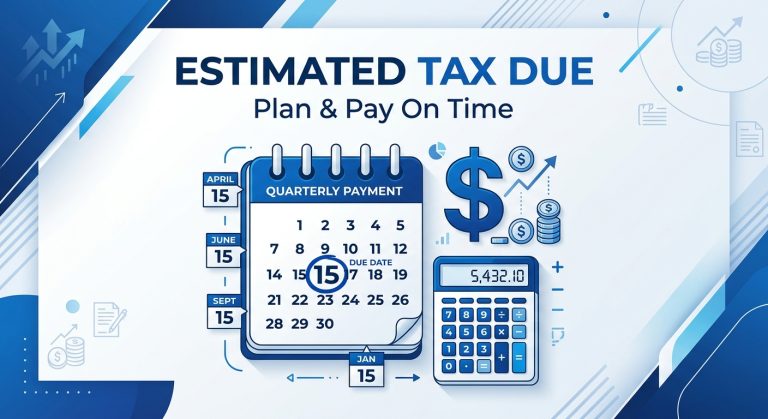
To help you plan for the rest of the year, here are all four estimated tax deadlines for 2026:
– **Q1: April 15, 2026** — Covers January 1 – March 31
– **Q2: June 16, 2026** — Covers April 1 – May 31 (today!)
– **Q3: September 15, 2026** — Covers June 1 – August 31
– **Q4: January 15, 2027** — Covers September 1 – December 31
Notice that Q2 this year falls on June 16 because of IRS calendar rules. Mark these dates in your calendar now and set recurring reminders. The IRS will not remind you.
## Who Needs to Pay Estimated Taxes?
You generally need to make estimated tax payments if you expect to owe at least $1,000 in tax when you file your annual return, and your withholding and refundable credits won’t cover that amount. Here’s who this affects most:
### Self-Employed Individuals and Freelancers
If you’re a freelance graphic designer, consultant, real estate agent, or any independent contractor receiving 1099-NEC income, you are responsible for paying both income tax and self-employment tax (Social Security and Medicare) through estimated payments. No employer is withholding for you. According to the IRS estimated tax guidelines, self-employed individuals must pay estimated tax if they expect to owe $1,000 or more.
### Small Business Owners (LLC, S-Corp, Partnership)
Even if your business is structured as an LLC or S-corp, you may need to make estimated payments for income that passes through to your personal return. Shareholders of S-corps who receive distributions or have insufficient wage withholding should also pay estimated taxes on that income. Business owners often underestimate how much they need to set aside — a common mistake that leads to April surprises.
### Investors and Gig Economy Workers
If you have significant investment income, rental property income, cryptocurrency gains, or gig economy earnings (Uber, DoorDash, Airbnb), these are typically not subject to withholding. The IRS expects you to pay estimated taxes on this income quarterly. The gig economy alone has contributed to over 65 million 1099-K forms issued in recent years, according to IRS data.
### Retirees with Non-Withheld Income
Retirees who receive pension income, IRA distributions, or Social Security may also need to make estimated payments if enough tax isn’t withheld from their benefits. You can elect to have federal tax withheld from your Social Security benefits by filing Form W-4V with your payor.
## How to Calculate Your Q2 Estimated Tax Payment
Calculating your estimated tax payment correctly is the difference between staying compliant and facing penalties. Here’s how to approach it:
### The Safe Harbor Rule
One of the most important concepts in estimated taxes is the safe harbor rule. The IRS won’t penalize you if you pay either:
– **90% of the tax shown on your current year’s return**, or
– **100% of the tax shown on your previous year’s return** (110% if your AGI was over $150,000)
This means if your income is roughly the same as last year, you can base your Q2 payment on last year’s tax liability and avoid penalties — even if your final tax bill ends up being higher. You’ll just need to pay the difference when you file. This is the most common strategy Netfintax recommends to small business owners who want a simple, penalty-proof approach.
### Using Form 1040-ES
The IRS provides Form 1040-ES, which includes a worksheet to calculate your estimated tax. You’ll need to estimate your adjusted gross income, taxable income, deductions, and credits for the entire year, then divide by four, adjusted for quarterly timing. The worksheet accounts for self-employment tax, alternative minimum tax, and other adjustments.
For Q2 specifically, a simple safe-harbor approach is to take one quarter of your expected annual tax and pay it by June 16. If your income varies significantly throughout the year, you can use the annualized income installment method, which lets you pay based on actual income received in each period rather than a flat 25% per quarter.
### Making the Payment
The IRS offers several ways to make estimated tax payments:
– **IRS Direct Pay** — Free, secure electronic payment directly from your bank account at IRS.gov/payments
– **Electronic Federal Tax Payment System (EFTPS)** — Free, ideal for businesses needing to schedule payments in advance
– **IRS2Go App** — Mobile payment via debit card or digital wallet
– **Check or Money Order** — Mail with payment voucher from Form 1040-ES
– **Same-Day Wire** — For last-minute payments on the deadline
For Q2 2026, the simplest method is IRS Direct Pay. Select “Estimated Tax” as the reason for payment, choose 2026 as the tax period, and pay the calculated amount. The transaction is confirmed instantly, and you receive a confirmation number. Keep this confirmation with your tax records.
## What Happens If You Miss the Q2 Deadline?
Missing the Q2 estimated tax deadline triggers immediate consequences. The IRS doesn’t send a warning letter or give you a grace period. Here’s what happens:
### Underpayment Penalties Start Immediately
The IRS charges a penalty for underpayment of estimated tax under IRC Section 6654. The penalty is calculated based on the amount you underpaid, the period of underpayment, and the current federal short-term interest rate plus 3%.
As of early 2026, the underpayment penalty rate is approximately 8–9% per year, compounded quarterly. That means a $5,000 underpayment left unpaid for 9 months could cost you $300–$400 in penalties alone — plus interest on the unpaid tax. The IRS uses Form 2210 to calculate the exact penalty.
### Penalties Apply Even If You Get a Refund Later
Many business owners assume that if they overpay overall by the end of the year, the IRS will waive late-payment penalties for missed quarters. This is not correct. The IRS assesses penalties on a quarterly basis, regardless of your annual outcome. If you miss Q2 and catch up in Q3, you still owe the Q2 penalty — even if you end up with a refund at filing time.
### No Automatic Waivers
The IRS may waive underpayment penalties if you can show reasonable cause — such as a casualty, disaster, or unusual circumstances — but simply being busy or forgetting is not reasonable cause. Taxpayers who retired during the tax year, became disabled, or had significantly changed circumstances may qualify for waiver by filing Form 2210 with their return.
## How Netfintax Keeps You Penalty-Free Year-Round
At Netfintax, we’ve seen too many small business owners scramble on deadline day — trying to calculate their payment, log into IRS systems, and figure out how much to pay, all while running their business. It doesn’t have to be this way. Our approach is proactive, systematic, and designed to make estimated taxes painless.
### Quarterly Reminder and Calculation Service
Every quarter, Netfintax notifies you of the upcoming deadline, calculates your estimated payment based on your actual year-to-date income, and provides a simple payment instruction sheet. No forms to fill out. No IRS website confusion. Just a clear number and a link to pay. Our clients tell us this alone saves them hours of stress each quarter.
### Real-Time Income and Expense Tracking
We integrate with QuickBooks, Xero, and other accounting platforms to track your income and expenses in real time. This means our estimated tax calculations are based on actual data — not guesses. If your income spikes in Q2, we adjust your estimated payment accordingly. If revenue drops, we reduce it. You never overpay or underpay significantly.
### Year-Round Tax Planning
Estimated taxes are just one piece of a larger puzzle. Netfintax offers year-round tax planning that helps you optimize deductions, manage your business structure, plan for retirement contributions, and minimize your overall tax liability. Estimated payments become a natural part of your financial workflow, not a quarterly panic.
### Penalty Protection and IRS Representation
If you’ve missed estimated tax deadlines in the past or are facing penalty notices, Netfintax can help. Our team of CPAs and enrolled agents can file Form 2210, negotiate penalty abatement where applicable, and represent you before the IRS if needed. We handle the paperwork so you can focus on your business.
## Action Steps: What to Do Right Now
The Q2 deadline is today. Here’s what you should do immediately:
### Step 1: Calculate Your Q2 Payment
If you haven’t made your Q2 payment yet, calculate it now using the safe harbor method: take 25% of your 2025 total tax liability — or 90% of your estimated 2026 liability, whichever is lower. Don’t overthink this. The safe harbor approach is designed to protect you from penalties.
### Step 2: Pay Before Midnight
Go to IRS.gov/payments and use Direct Pay. Select “Estimated Tax,” choose 2026 as the tax year, and pay the calculated amount. You’ll need your bank account and routing number. The payment is effective the date you submit it, even if the bank processes it the next day.
### Step 3: Document Your Payment
Save the confirmation number. Note the date, amount, and tax period (Q2 2026) in your accounting system. Share it with your CPA or tax preparer so they can credit it against your annual return.
### Step 4: Set Up Q3 Reminders
The next deadline is September 15, 2026. Set a reminder now. Better yet, schedule all remaining estimated payments at once through EFTPS so you never miss another deadline.
### Step 5: Schedule a Mid-Year Tax Review
If you’re unsure about your estimated tax amounts or want to optimize your strategy for the rest of 2026, schedule a mid-year tax review with Netfintax. We’ll review your year-to-date income, adjust your Q3 and Q4 payments, and identify opportunities to save before year-end.
## Common Estimated Tax Mistakes to Avoid
Over the years, we’ve seen the same mistakes repeated by business owners who aren’t working with a CPA:
– **Skipping a quarter because cash flow is tight.** Pay something — even a partial payment reduces your penalty proportionally. Something is always better than nothing.
– **Assuming your tax preparer handles estimated payments.** Most tax preparers only file your annual return. Estimated payments are your responsibility unless you have a written engagement for quarterly tax planning.
– **Using last year’s income without adjustments.** If your income increased significantly, last year’s safe harbor amount may underprotect you. Use 90% of your current year estimate for better accuracy.
– **Ignoring state estimated taxes.** Most states with income tax also require quarterly estimated payments. Check your state’s department of revenue website for deadlines.
– **Forgetting about self-employment tax.** Self-employment tax (15.3% on net earnings up to the Social Security wage base) is on top of income tax. Make sure your estimated payments cover both.
## Looking Ahead: Q3 and Q4 2026 Planning
Now that Q2 is handled, it’s time to look forward. The Q3 estimated tax deadline is September 15, 2026, and Q4 lands on January 15, 2027. Between now and then, here’s what smart business owners do:
First, review your year-to-date income in August. By August 31, you’ll have six months of financial data — enough to make an accurate projection for the rest of the year. Adjust your Q3 and Q4 payments based on this data. If your business is highly seasonal, this mid-year review is essential to avoid underpayment penalties.
Second, consider increasing retirement contributions to lower your taxable income. Contributions to a SEP IRA, Solo 401(k), or SIMPLE IRA made by your tax filing deadline can reduce your taxable income. Your estimated payments should reflect these planned contributions.
Third, plan for major purchases before December 31. If you need equipment, vehicles, or software for your business, purchasing before year-end can generate deductions that lower your Q4 estimated payment and final tax bill.
## Protect Your Business from IRS Penalties
Estimated taxes are one of the most overlooked responsibilities for small business owners — and one of the easiest to get right with the right support. The Q2 deadline is today, June 16, 2026. If you haven’t paid yet, do it now. If you’ve already paid, take a moment to ensure the amount is accurate and set your reminders for the rest of the year.
At Netfintax, we help hundreds of small business owners across the U.S. stay compliant with quarterly estimated taxes, year-end planning, and everything in between. Whether you need a one-time estimated tax calculation or full-service year-round accounting, we’re here to help you navigate the U.S. tax system with confidence.
**Don’t let another quarter slip by. Contact Netfintax today for a free consultation and let our team of CPAs handle your estimated tax planning — so you can focus on growing your business.**
## Frequently Asked Questions
### Is June 16, 2026 the actual deadline for Q2 estimated taxes?
Yes. The Q2 estimated tax deadline for the 2026 tax year is June 16, 2026. While estimated tax deadlines are typically the 15th of the month, they shift to the next business day when the 15th falls on a weekend or holiday. In 2026, June 15 falls on a Monday but the deadline is observed on June 16 due to IRS administrative scheduling. Always confirm the exact deadline each year through the official IRS tax calendar.
### How do I know if I need to pay estimated taxes?
You need to pay estimated taxes if you expect to owe at least $1,000 when you file your annual return after subtracting withholding and refundable credits. This typically applies to self-employed individuals, freelancers, independent contractors, small business owners, investors with significant capital gains, and gig economy workers.
### What happens if I can’t afford my full estimated tax payment today?
Pay as much as you can. The IRS penalty is calculated on the amount of underpayment, so even a partial payment reduces your penalty exposure. Then adjust your Q3 and Q4 payments to catch up. If you’re facing genuine hardship, you may qualify for a penalty waiver by filing Form 2210 with your annual return.
### Can I make estimated tax payments from my business account?
Yes. You can pay estimated taxes from any bank account — personal or business — using IRS Direct Pay, EFTPS, or by mail. Just ensure you use the correct Social Security Number or EIN and select the correct tax period when making the payment.
### Do I need to pay estimated taxes if I have a W-2 job plus freelance income?
Not necessarily. If you increase your W-2 withholding to cover the additional tax due on your freelance income, you don’t need separate estimated payments. File a new Form W-4 with your employer to request additional withholding from each paycheck. Use the IRS Tax Withholding Estimator to calculate the right amount.
### How does Netfintax help with estimated taxes?
Netfintax offers quarterly estimated tax calculation and planning as part of our year-round accounting packages. We calculate your payment amounts, remind you of deadlines, and ensure your payments align with your actual business income. We also represent clients before the IRS for penalty abatement and help businesses with past-due estimated taxes get back into compliance. Contact Netfintax today to learn more.